


I am now 67.
Nothing too extraordinary in that except, as a human being in the epoch of the speedy automobile in America, as a man of draft age during the Vietnam War era, and as a gay man during the age of AIDS in the world, survival was still not as easy to come by.
I now find myself surprised to discover, most fortunately indeed, that I am--at long last--happy.
Not like Goethe's FAUST happy, where I have ruined the lives of one or more others to get to where I am. Or having wallowed for long stretches in the deepest pools of the most putrid stench in life and been forced to shower myself off before I was able to gladly move on, enlightened.
No. It's more like that child-like innocent happy when you ask the universe for a few specific--and realistic--presents at Christmas, and then found every single one of them wrapped in a colorful bow under the tree. With your name on each one.
Everything has come together after so very many years of searching and not finding. The path I have taken is, indeed, littered with countless--and I do mean countless--disappointments and defeats. You get knocked down so often and so hard, sometimes you believe you will never get up again. Never succeed. Never find true love. Never be truly contented and, yes, especially happy. Bitter at times though not given over to lasting bitterness. Sad and sorrowful, of course, for the many friends and family who are gone at this stage of one's life; but who have left you with a burnished trunk, filled with good and glorious memories.
I am once again living in California.
After spending over four years in North Dakota, and then settling in for over three cantankerous decades in Colorado; at my age, the snow and cold finally drove me from the state that I had come to adore as a second home.
I have a solid and lovely new home, one that, except for the more traditional shape, is even more advanced and dazzling than Disney's Monsanto house of the future would have anticipated.
I work from home. My salary is not lavish but decent, especially for these times. The job isn't bad at all, just tedious now and then. (I didn't plan for my financial future, so I really cannot retire and be comfortable.)
And after all of these Quixotic years of self-discovery but also increasing discouragement, I have found the man I love. The man who loves me unconditionally and whom I love with all my heart. I cannot emphasize this triumph too much, despite the clichéd terminology. He has been my goal for my entire adult life. And charging into each decade of my life, I fully expected to find him, only to eventually cross another ten years off of my life without success.
I certainly experienced a few near misses over the past several decades.
To this day, I remember the sunny afternoon in 1970 or 1971, when I was driving south on the Harbor Freeway (I know California freeways are now numbered instead of named, but this is how I knew them then), having merged from the Santa Monica freeway with a clear path ahead of me. Suddenly, a car tire still in its rim sailed up and over the center barrier and seemed to hover above and ahead of me and my '66 Mustang. I instantly gunned the engine as the tire's forward momentum stalled; and I actually held my breath as it slowly disappeared above the closed convertible top. Time had slowed as I finally saw it reappear just beyond the trunk and bounce harmlessly on the pavement I had just passed over.
In the early 1990's, living in Denver but still teaching night classes in Colorado Springs at Fort Carson, I was driving my 1991 Hondo Civic sedan on I-25, through the most congested bend of the freeway through Denver. Always in the fast lane so I could reach the base in time, I found myself beside a massive and looming semi, also driving fast. The passenger window was down on this warm day and I was beside the truck's wheels, appearing taller than the car itself. Was it a sixth sense? Or was it just paranoia or good planning when I gunned the engine to pull ahead, only to hear a loud explosion. In the rearview mirror, I saw not only the tire explode into large and dangerous chunks that flew into the space on the freeway that I had just vacated, but the giant mud flap also shot directly into that space as well.
And then there was the war. At first I was too young to fight. But when I graduated in June of 1967, I would have been drafted or would have had to enlist; but I was saved by Miss Fouch's insistence that I, along with my best friend, Mike, see the guidance counselor a few weeks before graduation and at least get into junior college. From East LAJC, Mike and I transferred to Cal State Dominguez Hills and did not graduate until December of 1971. My draft lottery number was 119, and I had to report for a draft physical. I enlisted in the Marine Corps Reserve now that they were vacating Vietnam. As I have already recounted, I was persuaded to sign up for Marine OCS in the Spring of 1972. And by 1973, I attended Air Force OTS, was assigned to missile in North Dakota, and missed serving in the war entirely.
The 1980's began with me already out of the Air Force and forced to find a new career path, probably the lowest sustained period of my life. I had given it all up for love, and then did not have love or money. I had come so very close to losing it all.
Tuesday, July 4, 2017


Monday, December 23, 2013
Book Stores in the 1960's
South Gate Book Store was the first place I bought a regular book. Not a comic book, mind you. A real paperback book. It was Ernest K. Gann's FATE IS THE HUNTER. I had seen the film, loosely based on the book, at the Vogue Theater and wanted to read the book itself, which I had read was far superior to the movie.
South Gate Book Store was located on Tweedy Blvd. I would like to show you an image of that store front, but it no longer exists. In fact the entire block where it was located is gone, replaced by a Lucky Super Market parking lot. Inside the book is a gold, embossed sticker:

The exact address was 4167 Tweedy. The LO 9-1265 was the phone number of the store.
After I met Daylin Butler at East LAJC, we would often drive to West Hollywood to the Pickwick Book Shop located there.

On a Friday or Saturday evening, we'd spend at least a couple of hours pouring through the stacks of books carried by the store. The above photo is what the current location looks like. About all that is familiar to me now is that the book shop was two stories.
Pickwick Book Shops were located all over Southern California, as the bookmark below indicates:

When mom moved to San Pedro after I left for Air Force OTS, the Palos Verdes Peninsula Center was quite a bit closer, so I shopped for books there rather than drive to West Hollywood.
Of course, while in college, I'd also buy books at the bookstores at East LA and Cal State Dominguez Hills. Another chain I used to buy books at, now also defunct, was B. Dalton booksellers.
Sunday, December 15, 2013
Records Stores 1960's, Part III

Beside the Long Beach Fwy, on Firestore Blvd., it may now be a Target; but back in the late 1960's/early 1970's, this was a similar type of store called Two Guys. They had a large record section and reasonable prices.
Both Mike and I owned cars at this point, so we were no longer tied down to shopping for records at a local drug store or super market or department store, within walking distance or reached by bus.
Soon enough, however, even a store such as Two Guys could no longer compete with stores specifically opened to cater to a younger clientel looking only for top 100 albums.
These stores looked as if they were for a generation that was entirely unconcerned about merchandising and physical appearance. One such store opened in Huntington Park, on the other side of the street from Elliot & Craun and down a few blocks. Bare bones interior with record covers dotting the walls, they carried all of albums from the popular groups. I remember buying The Association's BIRTHDAY there, another album that I liked every cut.

While we were attending East L.A. Junior College, we met Lida Meek, whom Mike would eventually marry, and her friend from Bell High School, Dennis Madura. Dennis and I would become friends because of our mutual enjoyment of music. He owned a Roberts 8-track tape recorder/player.
I buy one, as well, and would take this with me to Air Force OTS and eventually to Minot, making my own 8-track tapes until cassette tapes came to dominate the home-recording market.


Eventually, beyond these smaller outlets and local record stores, Dennis and I would soon drive up to West Hollywood, to the newly opened, holy grail of record stores for the next few decades to come: Tower Records.

Especially when I would fly home on leave, Air Force friends in Minot would ask me to purchase a number of albums for them at Tower.
Saturday, December 14, 2013
Record Stores in the mid-1960's, Part II
Probably during the Christmas seasons in 1965-67, Mike and I would become more adventurous and take the bus beyond Huntington Park into downtown LA to do our Christmas shopping. Our primary destination was The Broadway Department Store, on Broadway.

One year, likely 1965, we were both wow'ed by the pretty young, dark-haired woman who worked at the perfume counter, who spoke English with a lovely, and very romantic, French accent. This might have been the year I bought dad a collection of colognes called Nine Flags, each fragrance in a small bottle for each of the countries, most of them European, represented by its national flag. Dad, always old school, had probably never gotten cologne before and did not seem to know what to make of this present when he opened it that Christmas.
The Nine Flags men’s cologne collection came out in 1965, it was still being sold well into the early 1970s. It was distributed by the Colton company of Boston, Massachusetts and was marketed by Gillette in the United Kingdom.
Each bottle held 2fl oz of cologne and was ball shaped and had a long neck covered with a brushed aluminum screw cap. The name of the cologne is on the bottle part of the cap and on the label on the base.
This ingenious collection was full of international flair and each cologne was named after its own country and scent. Each scent was tinted with a different color. I have also seen these in atomizer bottles, but more commonly in the splash type bottles.

Before Nine Flags, teenagers seemed drawn to Jade East cologne. That's the fragrance I owned, perhaps the year before, 1964, when it was introduced.

But enough of colognes. We were often at the Broadway to also buy records, more specifically record albums. Two albums come to mind when I recall our visits to The Broadway: Jefferson Airplane's SURREALISTIC PILLOW and Vicki Carr's IT MUST BE HIM.
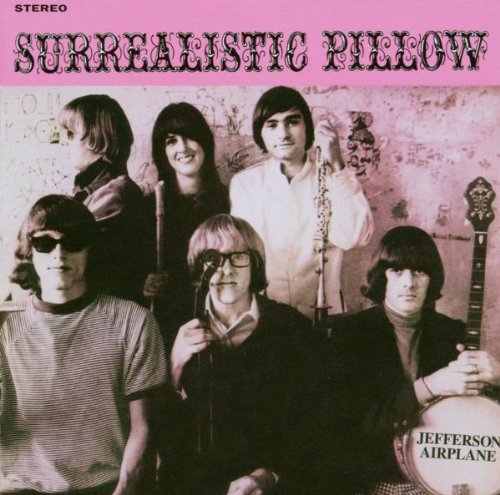
This was one of those albums, apart from a greatest hits collection, in which I liked every cut. We Five's YOU WERE ON MY MIND, and the Beach Boys' PET SOUNDS were two others. And, of course, most Beatles albums.


When we were finished with our shopping during the day on a weekend, we would have lunch at Clifton's Cafeteria, across the street and down the block from The Broadway. Mike invariably would order spinach, which I thought was absurd to actually, you know, pay for.

Another place we would buy records was at the Sears store on Bullis Road in Lynwood. Checking google maps, it no longer appears to be there anymore. A couple of the albums I remember buying there were The Beatles white album and The Mystic Moods Orchestra's MYSTIC MOODS OF LOVE.
Difficult to see the album here.

And, not all that surprisingly, it did have a romantic fragrance when you slid your fingernail down the plastic cover and opened it up. Well, it was the 60's.
One year, likely 1965, we were both wow'ed by the pretty young, dark-haired woman who worked at the perfume counter, who spoke English with a lovely, and very romantic, French accent. This might have been the year I bought dad a collection of colognes called Nine Flags, each fragrance in a small bottle for each of the countries, most of them European, represented by its national flag. Dad, always old school, had probably never gotten cologne before and did not seem to know what to make of this present when he opened it that Christmas.
The Nine Flags men’s cologne collection came out in 1965, it was still being sold well into the early 1970s. It was distributed by the Colton company of Boston, Massachusetts and was marketed by Gillette in the United Kingdom.
Each bottle held 2fl oz of cologne and was ball shaped and had a long neck covered with a brushed aluminum screw cap. The name of the cologne is on the bottle part of the cap and on the label on the base.
This ingenious collection was full of international flair and each cologne was named after its own country and scent. Each scent was tinted with a different color. I have also seen these in atomizer bottles, but more commonly in the splash type bottles.

Before Nine Flags, teenagers seemed drawn to Jade East cologne. That's the fragrance I owned, perhaps the year before, 1964, when it was introduced.

But enough of colognes. We were often at the Broadway to also buy records, more specifically record albums. Two albums come to mind when I recall our visits to The Broadway: Jefferson Airplane's SURREALISTIC PILLOW and Vicki Carr's IT MUST BE HIM.
This was one of those albums, apart from a greatest hits collection, in which I liked every cut. We Five's YOU WERE ON MY MIND, and the Beach Boys' PET SOUNDS were two others. And, of course, most Beatles albums.
When we were finished with our shopping during the day on a weekend, we would have lunch at Clifton's Cafeteria, across the street and down the block from The Broadway. Mike invariably would order spinach, which I thought was absurd to actually, you know, pay for.
Difficult to see the album here.

And, not all that surprisingly, it did have a romantic fragrance when you slid your fingernail down the plastic cover and opened it up. Well, it was the 60's.
Tuesday, November 26, 2013
Record stores in the 1960's, Part I

The above photo is possibly the location of a music store, Elliott & Craun, that was on Pacific Boulevard in Huntington Park, CA.
They primarily sold musical instruments. But way in the back, in an area that appeared to be added on to the building, they did sell records, mostly 45s and several albums.
The entire area was hawked over by a much older woman (at least she seemed much older than we teenagers, though she might have been in her 40s). As soon as you flipped through the rows of 45s in the bin, organized alphabetically, she would swoop in and shove the row back in place.
While record sales, even 45s for only a dollar, must have provided the store with a steady cash flow, I never understood why she seemed to resent our presence and why she seemed extremely relieved whenever we departed her protected realm.
I cannot recall if she said it to me directly, or I learned of the remark from Mike, but she once responded to a request for a specific record by flatly and arrogantly replying, "We don't carry 'kid' records." Of course, we were not "kids"; we were teenagers.
The store did carry charting songs such as Dionne Warwick's "Walk On By", "You'll Never Get To Heaven", and "Reach Out To Me". However, it might have been because those singles would also be purchased by adults.
As I said, 45s were often 99 cents or one dollar. Albums were typically $3.99 for monaural and $4.99 for stereo. The minimum wage when I was a senior in high school was $1.25 an hour, so it took a few hours of work to have enough money to buy one album.
The first pop album I bought was We Five's YOU WERE ON MY MIND. I remember the day I brought the record home, slit the plastic covering off the sleeve and took out the record. Mom had bought us a portable record player with speakers that swung outward or could be detached for greater sound separation.

I put the album on and listened intently. To this day, I still enjoy every song on that record. While I remember the day I brought the album home, I cannot recall where I might have purchased it. Elliot & Craun is a possibility. However, a Woolworth's across the street and perhaps down a block also started carrying pop 45s and albums, and I might have purchased it there. I was with my 9th-grade friend, Richard Watson, when he snapped up a few Dave Clark Five 45s there in 1964. It was he who owned the first U.S.-released Beatles LPs, MEET THE BEATLES and THE BEATLES SECOND ALBUM before anyone else I knew.


In the next few years, actual record stores would open in Huntington Park and Downey, though none in South Gate. Mike and I would buy albums at the Lucky market near him on Abbott Road and South Atlantic. And another new Lucky store would open on Firestone Boulevard, only a few blocks away from me.
I bought THE FANTASTICKS cast recording there, as well as many other albums, since the store was within easy walking distance and the prices were competitive.

There were several Wallich's Music City record stores throughout Southern California by the mid- to late-1960's, and they featured booths where you could actually listen to a record before buying it. But the store in West Hollywood, at the corner of Sunset and Vine; and another store later in Lakewood; were simply too far away to hike to. We did not have cars while we were in high school, and our parents frequently voiced the opinion that buying so many records was a waste of money. We only rarely could get a ride with them to make a record purchase.

Friday, August 9, 2013
Chapter Two: "I Buy American Records" - Saint Etienne
Records have been a part of my family's life for almost as long as I can remember. The photograph below of my mom and dad on a couch, before either I or my sister was born has mom holding a Stan Kenton album in her hands. Dad is holding a King Cole Trio album. Both appear to be 78's.

That photograph could have been taken as early as 1948.
The Stan Kenton album is titled "Artistry in Rhythm" and was Capitol No. 167 (45' - 48') 10" recording, so that likely helps confirm the photograph could have been from 1948.
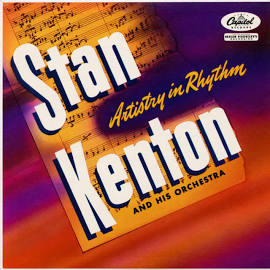
However, The King Cole Trio cover in dad's hands looks to be that of The King Cole Trio Volume 3 which is listed on one internet site as being a Capitol 10" recording from 1950.
In later years, I don't recall either record still being in either of their collections. Since they might have been 78's, mom or dad might have given them away or tossed them when 33 1/3 RPM's became more widely available and record players no longer played 78 RPM's.
Wednesday, August 7, 2013
Chapter One - "When I'm Sixty-Four" - The Beatles
Next month I will be 64.
When I bought the Beatles' album Sgt. Pepper's Lonely Hearts Club Band in the early summer of 1967, at the local Save-On drug store on Tweedy Boulevard in South Gate, California, I remember listening to the song, "When I'm Sixty-Four". I know that I must have briefly imagined when and where I would be at that age.


What I do know now is that I certainly could not have imagined, back then, of actually being that old. Ever.
And let us not now deny that, when I was still 17 in that impending halcyon Summer of Love, 64 would have been considered old by any one's definition. Franklin D. Roosevelt, one of the most iconic presidents of the 20th century, and though living with polio most of his adult life, and a heavy smoker to boot, died at 63. President Kennedy, most people's definition of youthful vim and vigor in the White House, was assassinated at the age of 46. Not particularly young by most interpretations.
Today, at 63, I may not feel old in most of the ways that we now define "old". If generous, or even a bit delusional, I may not even look old in my mind's eye. But my much younger self would have thought, meeting up with me now, that I was old. No doubt about it.
For those born between 1949 and 1951, the life expectancy was pegged at just 66.31 years for white males.
By no stretch of my youthful imagination could I have anticipated living in Denver, Colorado.
If I thought of Colorado at all, I do know that the regional airline Frontier offered an incredibly low air fare to fly unlimited throughout their entire route system for a month. Problem was, their nearest approach to California was Las Vegas, Nevada, and I didn't even own a car. My mom would certainly have not let me drive her boxy 1960, 4-door Rambler. Though I took driver's training in high school the previous year, I would not even have my driver's license until the fall of 1967, and only then after taking the driver's test twice.
The 1960's were a tough decade to live through. While not on the same level of 1930 through 1945, the years were not kind. Freedom riders, Free Speech Movement, the Vietnam War, Civil Rights conflicts, and demoralizing political assassinations that never seemed to end.
Yet we always remained somewhat optimistic about the future, for all that was occurring around us.
If you avoided the nightly news, television always seemed upbeat. From Star Trek to the Beverly Hillbillies, it was other worldly or just plain silly. For most of my time, I studied for school, watched TV, and worked. And I listened to music. Bob Dylan and the Beatles alone trumped any other decade, before or since.
Of course, despite the Stonewall riots at the end of the decade, gay rights and equality were too far in the future to be of consequence. I kept my orientation a secret. I satisfied myself with visits to the Loop Market's magazine stand to pick up copies of soft-core Tomorrow's Man and other such tamely erotic publications. It would have to be enough for several years to come.
Monday, December 24, 2012
Ann in her Long Beach condo, Christmas 1978

Ann & Mark were separated. I remember that when I had to start telling everyone that I was gay and had to resign from the Air Force, it was Mark who delightedly called and told mom before I had a chance to tell her.
Me in mom's apartment at Harbor Towers, San Pedro, Christmas 1978

As you can barely see in the background, mom always taped all of her Christmas cards to the back of the front door. Every year she had tons of cards. These days, I don't think most people send nearly as many cards as she sent or got.
Of course, for me most of those who used to send me cards are gone.
I look at that Pendelton shirt and recall that, a year later when I was looking for a job, I did not own a suit to wear to job interviews. Not knowing that might have prevented me from getting some jobs, I wore that shirt over a dress shirt and tie. It was the best I could do with no income.
Mom's apartment, Harbor Towers, Christmas 1978

I had not intended to return to Southern California for Christmas vacation when I was teaching at the Academy during the break of Christmas 1978. However, one of my students from San Diego urged me to drive so that he could hitch a ride as far as Tucson--he would help with the driving on the way.
We took I-25 south through Albuquerque. Before we reached El Paso, we turned West and continued across southern New Mexico and Arizona until Tucson. I dropped him off at his parents' house and stayed at a Holiday Inn in Tucson before driving on. I believe we stopped somewhere along the way near Santa Fe the first night and had dinner at a motel restaurant. He found a hair in his food.
After my motel stay in Tucson, I continued across to San Diego and turned north to San Pedro, staying with mom and visiting friends and family.
Unfortunately, I had to drive back to Colorado Springs by myself since the cadet found another way to get back to the Academy. (He may have flown from San Diego.)
The drive back was rather boring. At the New Mexico-Colorado border, Raton Pass, the roads were very icy and the drive a bit treacherous in a car with rear wheel drive and me without chains. But I made it back home all right.
Me at Doherty High School, Fall 1978

John took this of me.
I would actually return to Doherty High School when, in 1988-9, I returned to college for secondary teacher certification. I never found a public school teaching job, so instead when a tech writing job became available in the Denver Tech Center first, I commuted for a few months in the Spring of 1990. And then the IBM job became available in 1991, so I moved to Denver permanently.
I actually did some student teaching for a few weeks at Doherty High School in the fall of 1988.
Two more pics of the gymnastics meet at Doherty High School, Fall 1978

The left pic is of the gym during the meet. The young woman on the right was a well-known female gymnast, but I no longer recall her name.
Hot Gymnast Bob Desiderio at Doherty High School meet, Fall 1978

I had John take this picture for me. He did so, but he also took, for himself, pictures of female gymnasts or young women in the audience who appealed to his tastes.
Olympic Gymnast Kurt Thomas, Doherty High School, Fall 1978

In the fall of 1978, my friend from Minot and the BOQ, John Ng, got tickets for us to go to Doherty High School, to see a gymnastics exhibition and match. Olympian Kurt Thomas was there not to compete but to ensure a full house.
Here are two pictures of him just showing off.
John Ng had moved to Colorado Springs after Minot the same summer. When my money ran out and I was about to either sell or lose my house, he offered to let me live in his basement until I worked something out. Fortunately, I was able to get a job at Kaman Sciences in the Spring of 1980 and keep my house.
I would run into John for years afterward. I had bought at least two Sony Betamax video recorders when we lived in Minot. He continued his independent electronics business for a few years until he left the Air Force, always wishing that he could have given me his commission instead of just resigning it.
Me on the back patio, late Spring, early Summer 1979

Inadvertent as it may have been, this could have been the last photograph taken of me before I learned that Cadet Bostic had turned me in to the OSI and my career was effectively over.
I cannot even say who might have taken this picture of me on my back patio, except that it might have been one of the two gay Cadets, George or Bill.
The young couple next door with the infant were building that tall fence. It was too tall and rather ugly, and so I was happy when the next owners, not that long after, moved in and tore it down, building a lower fence that restored the view from my back patio.
The patio chair I was lying on I believe I bought in Minot.
I would drive in that final innocent morning with Bruce Degi, with whom I shared a cubicle. I was to attend Air Command and Staff College in the fall and he would attend in the Spring. That's why we were sharing the same cubicle.
I had finished up my summer course for students who had failed the freshman English course during the Spring. I was speaking with a couple of other officers in another cubicle when Colonel Shuttleworth stuck his head in and told me that he needed to see me.
On my walk with him toward the department conference room, I had a developing sense of unease. He said nothing at first, but I knew something was very wrong. Before we reached the door, he told me that there were two gentlemen to see me, he may have even said that they were from the OSI. That's when my heart seized up in terror. There was nothing good about a visit from those scoundrels.
We might have been in the Soviet Union during the Stalin era, and I was being told that the KGB needed to question me.
They were in civilian clothing so that no one would know their actual rank. The first words out of their mouths as they opened the brief case on the long table was, "We have the letters."
There inside were every one of the six letters I had send Cadet Bostic while he was on leave, the leave in Maryland that I had gotten for him. To say I was stunned would have been insufficient. Paralyzed was a better term. My mind was racing, wondering what had happened. Had his parents discovered the letters and demanded that he turn me in? Had something else totally inexplicable occurred?
I could not suspect that he had done all of this on his own. That he had lied to me and lied to others, to end my career so viciously.
They then launched into complete BS by attempting to get more out of me, "If you know any others, we need to know their names." They explained that every homosexual was susceptible to blackmail, so they needed their names, as well. I was too paralyzed to say anything, but I certainly was not going to rat on anyone else, on my friends. George, Bill and Dan were all gone. Only those few instructors such as Gina and Arlene (the Army Captain) were left to turn in at the Academy.
When they realized that I was not going to offer up anyone else's name, they then finally told me that I was allowed to have an attorney and pushed across the name and phone number of one at Peterson Air Force Base.
They, of course, claimed in their report that they had offered the legal help BEFORE asking for any information from me. That was--entirely--a lie. They could not even do their jobs without being devious and dishonest. "I will not lie, cheat or steal, nor tolerate among us those who do." That was the Academy motto, and these two, who may have been officers or may have been enlisted, lied in their report.
When I was also given their report, which contained the minutes of all of the meetings between Cadet Bostic and the OSI, I was further slugged in the stomach. I had not been able to reach the Air Force attorney at Peterson, so I did not know what to do next. Colonel Shuttleworth suggested that I see someone else in the Academy Law Department. It was this officer, a major, I believe, who poured over the OSI's report. It was only then that he confirmed that Bostic had been reporting to the OSI for two months, almost from the beginning of our association. I quickly realized that he went after we had met and gone to the Overlooks to talk, where I warned him that he was being too overt in displaying his interest in me. We then drove to my house. I had given him the choice of my driving him back to his dorm or to wherever he wanted to go otherwise. He told me that he wanted to go to my house.
I now believe that I may have mentioned to him that I had discussed him with George, Bill and Dan. Keith had already known about Dan and his situation. Their investigation had long ago concluded when Dan agreed to resign and just accept his diploma and leave at the end of the spring term.
Perhaps he thought he would somehow become entangled in that investigation, and his going to the OSI a first strike on his part, to prevent his being thought of as gay and come under investigation. However, what he did and, further, what he said to the OSI simply implicated not just me but several others. Furthermore, he pretended to continue to be attracted to me and to visit my house. But every time he left my presence, he went to the OSI and made yet another confession. And he lied. Repeatedly.
After that, I had no other course of action to protect myself and others but to turn against him and expose his lies. As weeks passed, other cadets came forward and told their stories, stories that corroborated my information. Soon enough, I had another Air Force lawyer, one in the Law Department who assisted with the lawyer from Peterson AFB, and a civilian attorney who had helped Dan, Mr. Boomes.
When two other cadets in Bostic's Squadron 15, who knew about Bostic and were forced to admit that he had also told them he was an orphan with adopted parents who paid someone so Keith could use their dead son's identity to get into the Academy, my Law Department attorney proclaimed in derisive laughter, "Now everyone has an attorney!" Bostic had lied to both of my Air Force attorneys when they questioned him since they knew everything that I had told them about him.
He did not have a chance. They trapped him in every one of his lies.
When the cadet honor system OIC took a look at the charges against him, that officer knew that they could not even allow a cadet board to investigate these charges. The whole incident was much too sordid.
All of that time and energy and those resources that the taxpayers funded to investigate and kick out gay officers and cadets was an incredible waste. So many lives had been ruined thereby. For an institution that promoted honesty, they had created an environment that promoted lies and dishonesty. For a system that valued security, they had fostered insecurity and fear.
Congress finally ended all of that just a couple of years ago. We are all the better for it. The nation is the better for it. As Dalton Trumbo had proclaimed about the McCarthy Era and the communist witch hunts, "It will do no good to look for heroes and villains. There were none, only victims." (I first heard this narrated by Henry Fonda in LIFE GOES TO THE MOVIES; however, I cannot find it elsewhere--but it reflects the antigay witch hunts equally well.)
Me at Pikes Peak, and the Navigator's retreat, Spring 1979

Obviously, Roger took the picture of me with Garden of the Gods in the background.
The photograph on the right is of the Navigator's retreat. This castle was built by General Palmer for his wife. If I recall, she never really liked living there and spent most of her years back east.
Sometime after General Palmer died, his house and grounds were donated to the religious group, the Navigators as a conference center and retreat. It's not always been easy to get to see the grounds as they began to require reservations and usually well in advance.
When I see myself smiling in that picture, I realize that only a couple of months later, and my career would effectively be over. In about seven or so months, it would officially be over.
One of the officers in the department would tell Gina Martin that I ought to move to some city like Denver where I would be more tolerated than I would in Colorado Springs. If I had not already intended to remain in my home, whatever the cost, this surreptitious remark, probably not meant to reach me, maximized my determination to remain.
Roger Benninger, Spring 1979, with Pikes Peak in the background

Here Roger is, again in Garden of the Gods, with Pikes Peak in the background.
Besides Mike Mebs, Roger is my oldest friend (or friend whom I have known the longest) since our days at Minot AFB. I have no idea what happened to Dave Moore or Randy Bancroft from our days at Yorba Junior High School. Dennis Zito's wife did not friend my request on Facebook, so I don't know what they are up to these days. They were from my Marine OCS months and beyond.
But, off and on, Roger and I have kept in touch over the many years in between Minot and now.
It's always valuable to have friends who can remind you of you were a long, long time ago, when you were both younger than words can now describe.
Those who know you now can sometimes barely discern that it is you in those old photographs from long ago and, usually, far away.
What happened to the clothes we wore then? Or the hair we used to have so much more of?
We could not often define how our lives were going to turn out. When we would lose our parents along the way and other family members or friends.
On the phone a few weeks ago, Roger told me that he finally looked up the accident report for Tom Brundige back in the early 1980's. It seems that an inch or so of his parachute fabric, as it was being deployed after Tom bailed out, caught on the ear piece of his helmet and, when it yanked, broke his neck on a bailout that otherwise would have been survivable.
His friend was gone because of something so minuscule, made significant by something that should not have had any significance at all. You lose a friend over an inch, or fraction of an inch, of material that was intended to help save your life.
Fractions of an inch in combat are often the difference. But his death was in peace time. Or the remaining few years of the Cold War if you would have it.
It was not as if it were decades in between my resignation and the time when everything related changed so dramatically and, we hope, forever.
Roger Benninger, Garden of the Gods, Spring 1979

The Spittin' Kittens ADC unit that Roger piloted T-33's for often flew into Peterson Air Force Base. In the Spring, he was another of those who visited me.
We went to the Garden of the Gods, among other places. We also had dinner at a restaurant in one of the islands along Academy Boulevard, near the intersection of Palmer Park Boulevard. Roger used to remember the name of that restaurant and the great meals we each had that night.
Bruce Kelz was another visitor who came by for a few days that Spring.
6555 Palmer Park Blvd. late Spring 1979

The top photograph has Bill Ryder's Pacer in the driveway. You can see aluminum foil in the bedroom window to help block out the morning sun. Those cheesy, thin curtains hang in the closet window over the garage and the front room window.
In both photographs, you can see the lawn that the builder had installed the previous year.
In the bottom photograph, you can see the aluminum foil in the family room window.
On google maps, I saw my house as it is recently. The lawn was devastated and almost entirely gone all the way around the house.
I lived at this address, as I have said, from the Summer of 1978 until the Spring of 1991. I sold my house in 1994 or 1995, after renting it out to three different tenants. Once you rent out a house, you never really feel the same about it after that. When my friend Roger's friend and his boyfriend lived there for several months, I still would spend a random night sleeping in the spare bedroom when I drove down there. And in between renters, I would return to fix up or paint one room or another.
Yet when it looked as if I would never return to the Springs to live, and after I had become exasperated with renters who did not take care of my house when they lived there, I finally decided that I needed to sell it. It was too difficult to rent in Denver and rent out my house in the Springs.
I did have my RAoF characters show up in the backyard to bury the cremated remains of Schnozz, my cat. Pictures of her here in Colorado Springs will show up soon enough. And the move to Denver would be a decade away after I got her as a kitten from someone at work. That was my homage to this wonderful residence on the hill, overlooking so much of the city and the mountains beyond.
These photographs become signposts of where we were and where we are no longer. Of those whom we knew and now longer know, or those with whom we were friends and family whom we no longer experience among us.
They are little portals, tiny windows into our past lives and past experiences, some of which we treasure more than gold or jewels. Places where we spent so much time, or very little precious time, only to find that those times are gone forever. They exact a twinge of our souls when we linger over them and pull from our dusty thoughts a bright memory that does not ever seem to fade.
Selectively pulled out from our pasts, like a dentist might remove a tooth, we might not be exactly who we are now, to our detriment.
Bill Ryder in my family room, Spring 1979

While George labored in the kitchen, Bill Ryder, the third friend of the Academy gay trio, was shining his shoes, I believe, in my family room.
Bill had had some minor medical issues that Spring, but I think his main problem was that, discovering the bars and bathhouses of Denver, he partied way too much that Spring. He failed enough courses that, meeting an academic board, he essentially flunked out and never graduated. Like Dan, he was not even commissioned. Instead, he was required to serve out his required time as an enlisted man.
The last I had heard was that Bill was stationed at Travis Air Force Base in Northern California. He met a guy and they settled in together. Whereas George had probably been a bottom, as had Dan, Bill was exclusively a top. That and his relationship probably prevented his getting HIV.
After Dan moved from Denver, I never heard anything further about what happened to Bill Ryder, the only other survivor of our little group.
You can see that I went with chrome furniture and chrome lamps. That couch and chair looked really nice; however, the fabric shed a lot when it was new. Also, the fabric supports for the cushions tended to tear with repeated wear, especially with the larger, three-cushion chocolate fabric couch I bought for the living room. I was always having to order replacement support pieces, take the couches apart, and fit them back together after the replacement.
The little stools were part of a set of four that came with a game table that I had bought. I used a stool to set a plate on when I was eating and watching TV on my large Advent 6-foot TV that I bought on credit that Spring.
In the window behind the couch, I had to put aluminum foil and heavier currents to block out the brutal afternoon sunlight that faded the picture of the projection TV had I not done so.
The family room, and other rooms in the house, would feature prominently in many photographs in the decade of the 1980's after I was forced to resign from the Academy.
I was able to get just under $10,000 as severance pay for having a regular commission. That allowed me to buy some bedroom furniture, two dressers and a night stand and headboard, which I still have. The headboard and night stand for the spare bedroom I sold off or gave away when I moved to Denver in 1991-2.
